
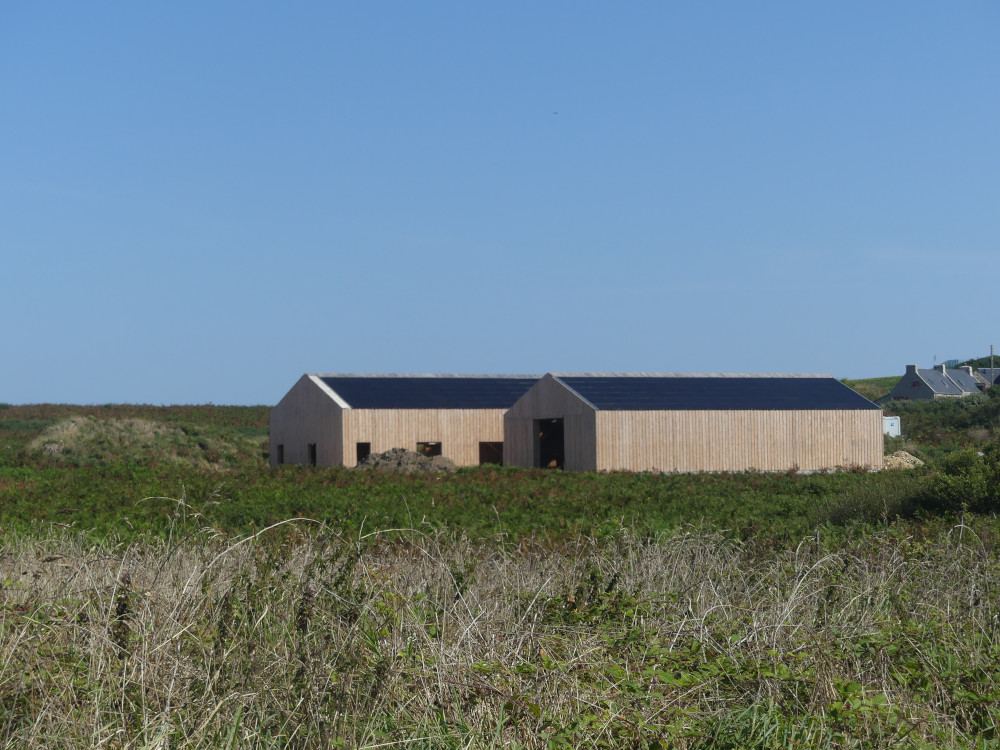
Although much of agricultural production takes place outdoors on farmland, infrastructure such as barns, livestock housing, polytunnels, cold rooms, processing facilities, sales areas and changing rooms is essential to farming. These facilities are considered to serve three functions: primary production; activities related to the continuation of the production process, such as on-farm processing or farm visits; and business accommodation. All of these structures, including those that can be moved or dismantled, such as polytunnels, modular structures and lightweight buildings, are subject to planning permission.
But a decline, and in some cases the complete disappearance, of agricultural buildings and property has been observed on the islands. This situation results from agricultural properties being converted to other uses, such as housing or caravan and boat storage, and from their transition towards residential or tertiary activities; speculative land holding; and the loss of functionality due to the configuration of the surrounding area or the buildings themselves, such as outdated milking sheds or buildings located too close to housing. However, because of a limited understanding of the practical realities of agricultural activities, as well as the prevalence of issues relating to residential development, the issue of agricultural infrastructure was still given little consideration until a few years ago.
In order to support the recent revitalisation of island farming, the regular renewal and development of agricultural infrastructure is essential. However, under French coastal planning legislation in particular, meeting this need is especially challenging. The islands are subject to numerous environmental protection measures, reflecting their rich biodiversity and vulnerable heritage. They are entirely covered by France’s Loi Littoral and planning documents therefore take these protection measures into account when defining areas where urban development is restricted or even prohibited, including for agricultural purposes. Moreover, these island territories have no inland areas outside the scope of the Loi Littoral to which agricultural infrastructure could be relegated.
Today, for both elected representatives and agricultural professionals, the challenge is therefore to maintain a sufficient stock of legally compliant and functional agricultural infrastructure without compromising the islands’ rich environmental qualities, which in turn contribute to the sustainability of farming activities.
Translated by Tilly O'Neill
