

[This article is taken from content published in July 2024 on the Champs Libres website where you will find hundreds of other resources linked to Brittany’s heritage]
The nuns who taught
During the French Revolution, the closure of convents led to elementary education becoming entirely secular. However, at the beginning of the 19th century, primary education for girls was once again largely taken over by nuns. Their return to boys’ education would take longer. From the start of the Empire, nuns once again took up their mission to educate young girls: the Ursuline congregations in Nantes, Quimper, Vitré, and Saint-Servan; the Filles de la Passion in Saint-Malo; the Sœurs de La Sagesse in Rennes and Nantes. In 1819, in Saint-Brieuc, the Filles du Cœur de Marie were responsible for around 400 pupils. These women focused more on education in the moral and religious sense than on formal instruction, transmitting values and beliefs as opposed to academic knowledge.
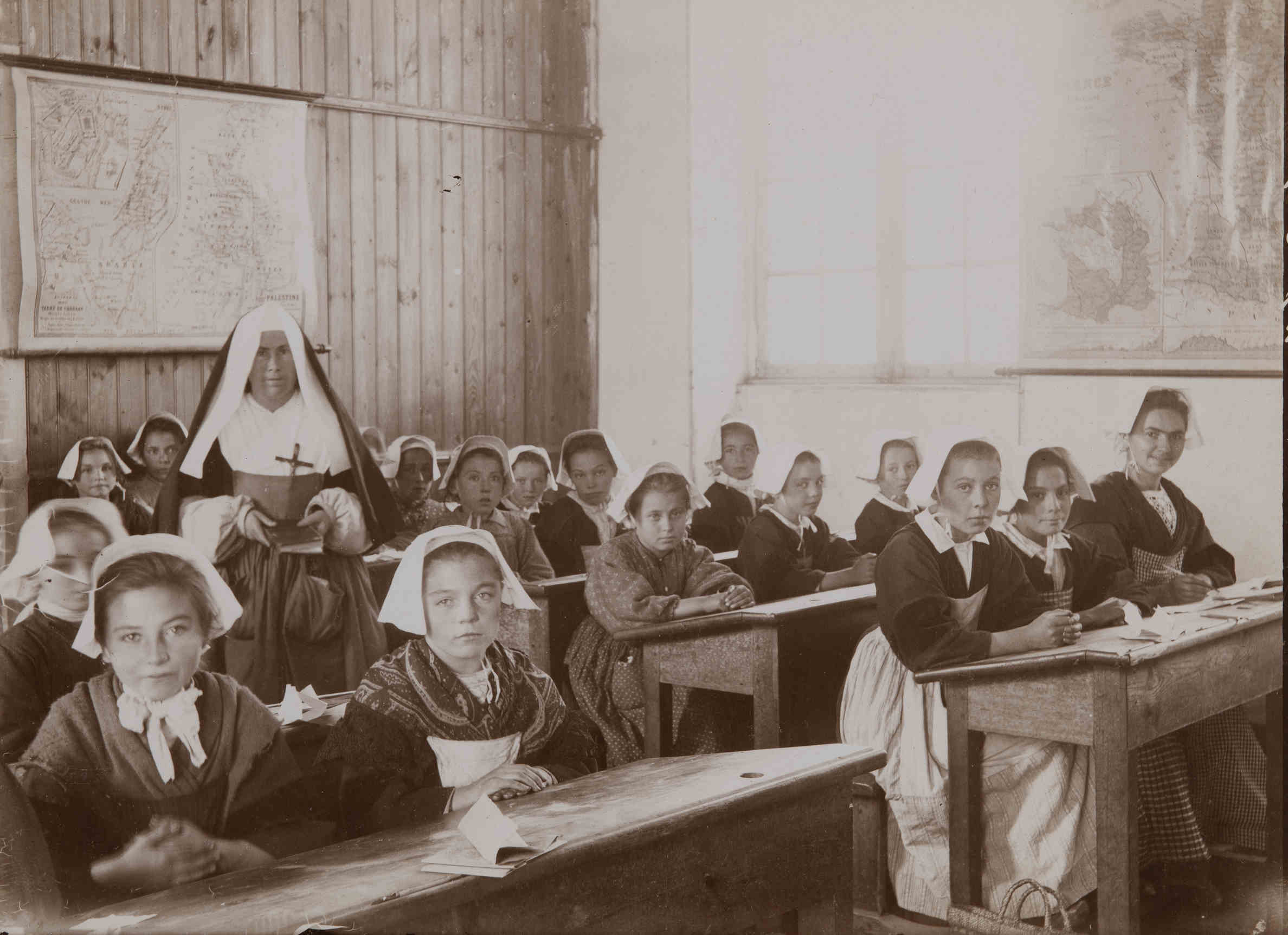
In 1904, Émile Combes' anti-clerical policies prohibited religious congregations from teaching within the education system. This ban was lifted under the Vichy regime under the law of 3 September 1940, which once again authorised teaching congregations and reintroduced religious instruction into secular schools.
Few Breton local authorities complied with the legislation of 1836, 1850, and 1867, which made the establishment of public schools for girls compulsory. During the first half of the 19th century, some female teachers took charge of young girls, who would learn to knit and embroider as well as receive instruction in reading and religious education. In more traditional rural areas, lay female teachers, most of whom had no local ties, were often viewed with suspicion. In contrast, nuns who settled in villages in groups of two or three, visiting the sick, helping the poor and providing instruction, were more easily integrated. It might have been considered acceptable to send a boy to a lay teacher to learn reading, writing, and arithmetic, but the education of a girl, typically destined for marriage and motherhood, and expected to embody religious piety and respect for family values, was entrusted almost exclusively to the nuns. Consequently, universal education in the mid-19th century was far from a public service.
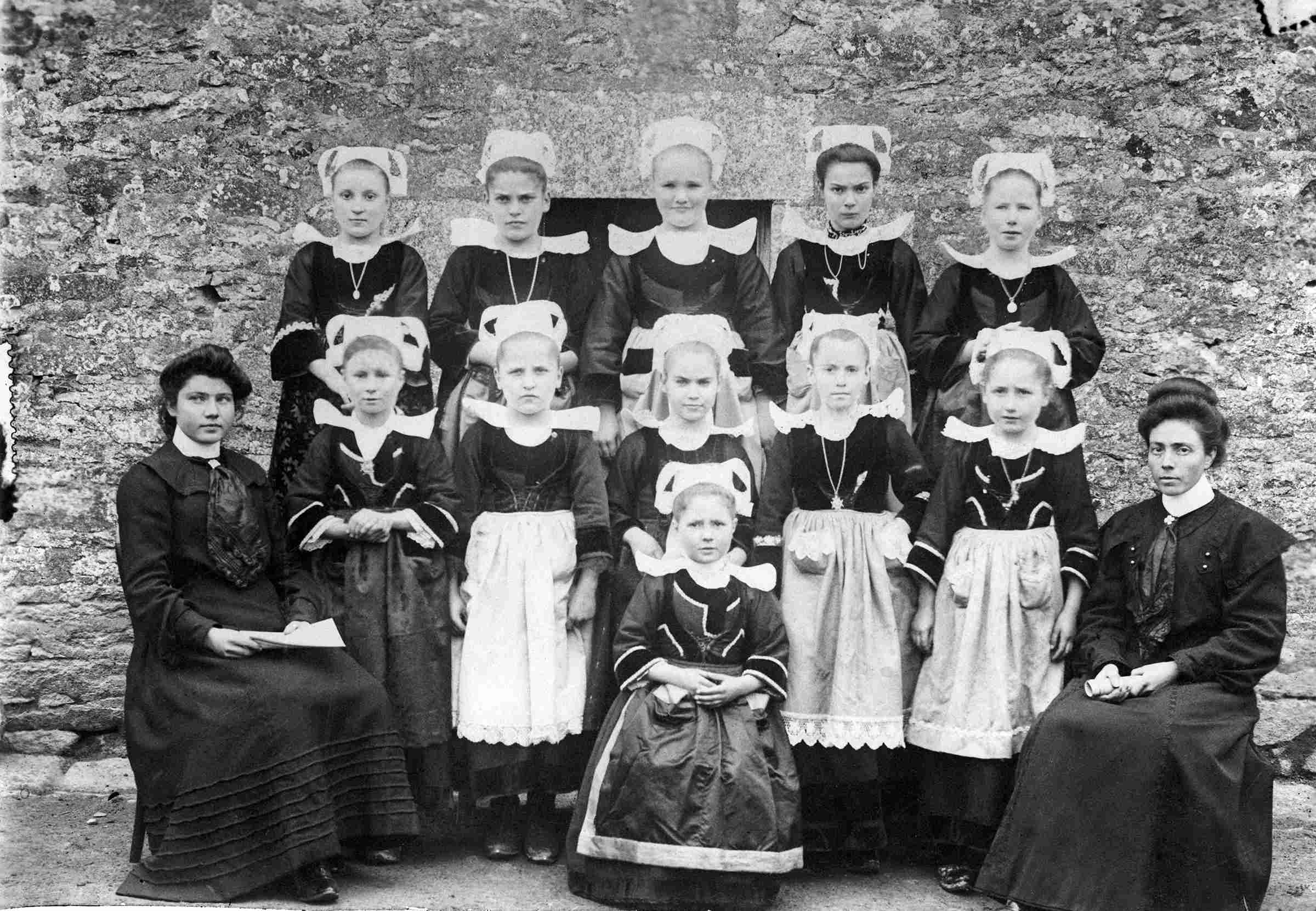
Time for change?
Before Paul Bert’s law of 1879, there were no teacher training schools for women in Brittany. That law made it compulsory for every department to have one and the training school in Rennes opened in 1882. Until then, women in Ille-et-Vilaine could only access a one-term training program in a boarding school, first in Rennes and later in Fougères. Following the 1879 law, women's teacher training colleges, known as Écoles Normales, became more widespread and were no longer run by religious orders. Religious instruction was removed from the curriculum and replaced with lessons in morality and citizenship. A subsequent law in 1886, which enforced the complete removal of religion from teaching staff, allowed female teachers to work in girls’ schools, pre-schools, and co-educational schools. In boys’ schools, however, women could serve only as deputy teachers, and even then only if they were related to the headteacher.
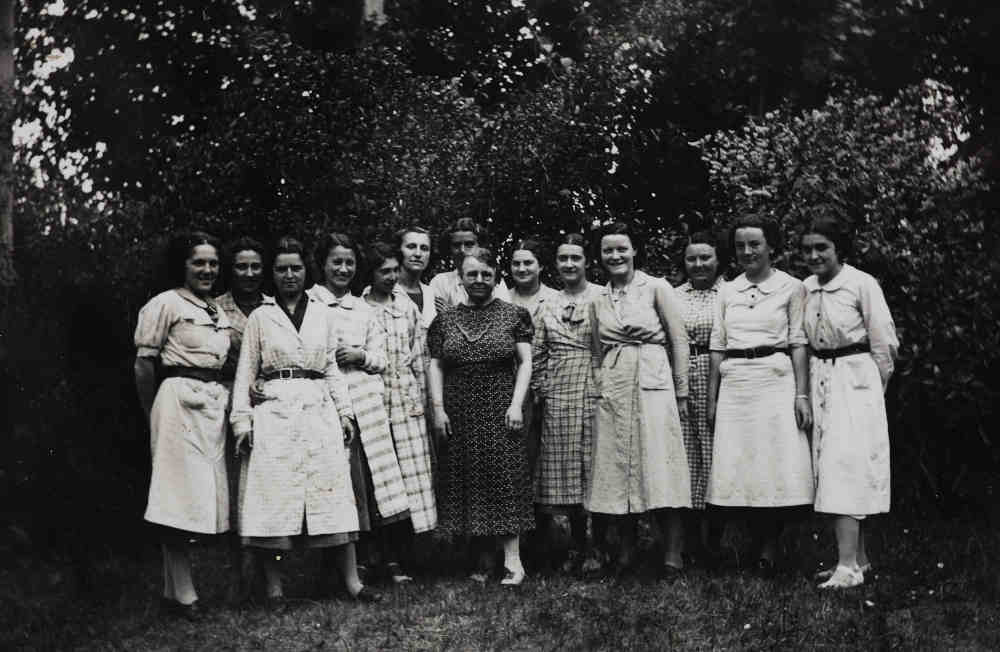
The daily schedule for these future schoolmistresses included an obligatory eight and a half hours of sleep, compared to eight hours for men. They were also allotted an extra half-hour for ablutions, meals, breaks, cleaning the school, and physical exercise, all justified under the pretext of “the laws of nature.”
At the turn of the 20th century, training at an École Normale was the standard pathway to becoming a teacher, but fewer women than men pursued it. The majority of female teachers held only the equivalent of a primary diploma - the minimum qualification required to work as a supply teacher. They had little job security, with no fixed salary or guarantee of employment. A woman’s own academic career limited her opportunities for professional promotion and hindered her professional career advancement. Even when, in January 1883, women could technically become secondary school teachers (professeur de lycée), they were required to take the exams without having received the corresponding instruction and they would not be granted full access to all educational institutions until 1924!
Qualified schoolmistresses
In the 19th century, teaching salaries for women were very low at the start of their careers, often forcing them to take on additional work to make ends meet. Although they did receive a salary, married women had to wait until 1907 before they could use it freely. Achieving equal pay for primary school teachers in France in 1919 represented rare progress for working women. Far from their families, the solitude and limited financial means of female primary school teachers were compounded by the fact they tended to remain unmarried for long periods. Books on morality at the École Normale instructed young women that, upon completing their studies, they should remain unmarried “in recognition of what the state had provided for them so they could fulfil their duties to the best of their ability without the added burden of household chores.” In their historical study of French teachers who worked before 1914, Jacques and Mona Ozouf even referred to teaching as an “old maid’s profession”.
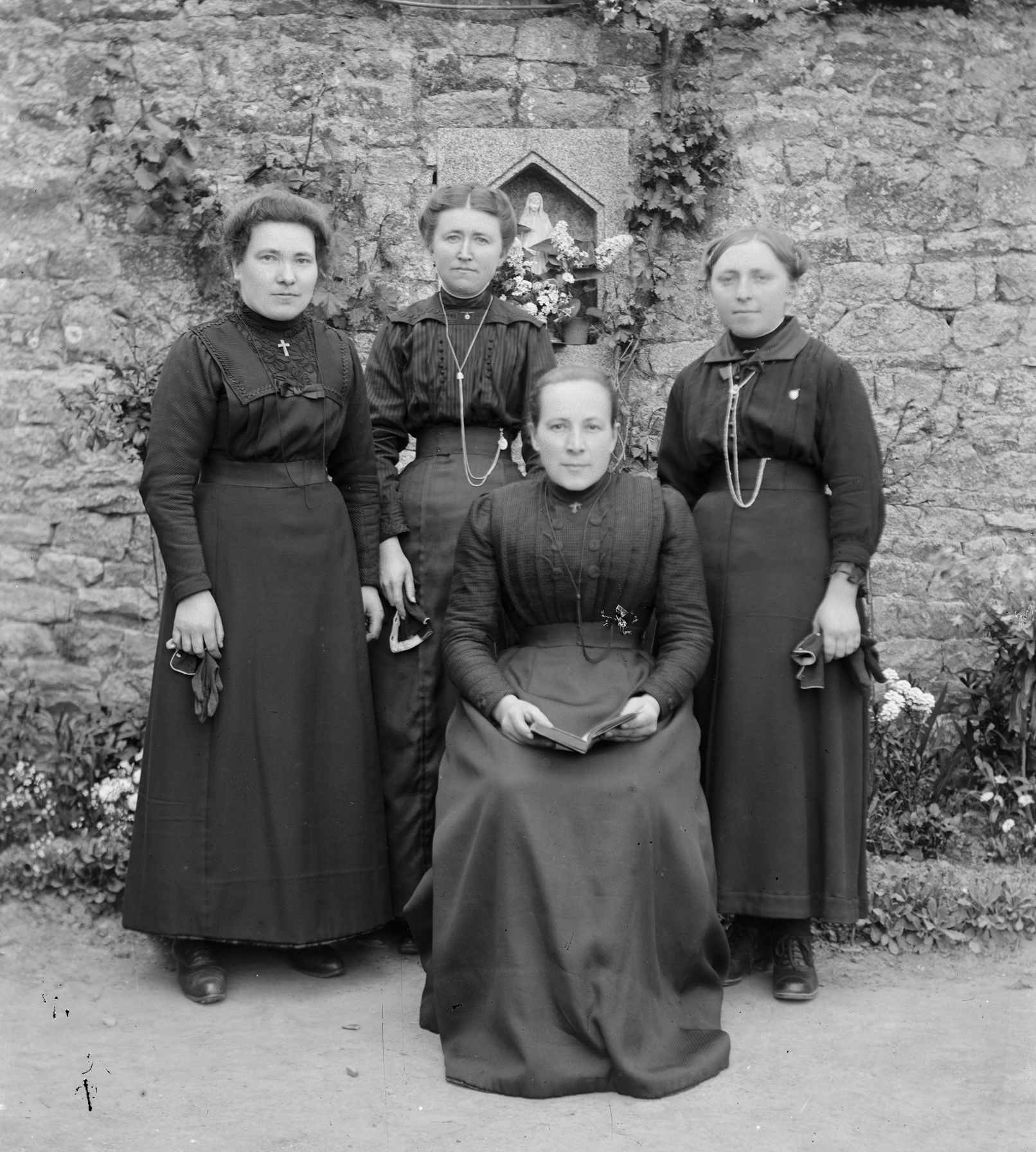
For many years, the Education Administration sought to control female teachers by monitoring every aspect of their lives, and many inspection reports focused primarily on their behaviour, attire and morality.
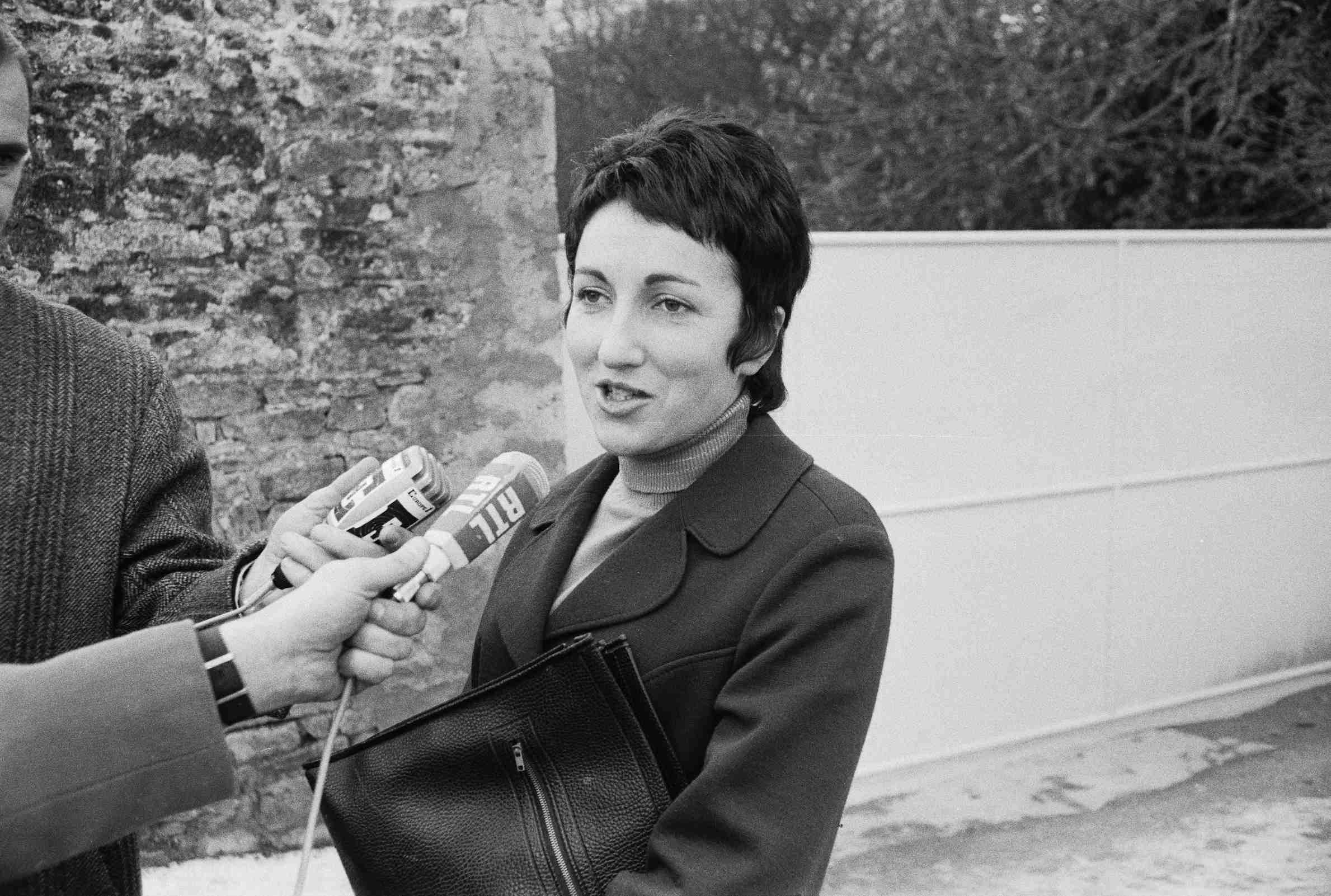
The case of a schoolteacher in Quimperlé is a striking example. At the start of the 1970s, Michèle Postollic, who had been teaching since 1958 at the Lycée Jeanne-d’Arc in Quimperlé, became the focus of local attention. Married in the 1960s, she divorced and later remarried Bernard Brunou, himself a divorcee. Diocesan authorities judged that these changes in her personal life made her unfit to teach and demanded that she resign. Ultimately, she was dismissed. This case illustrates how, even in the second half of the 20th century, female teachers’ private lives remained under close scrutiny, and highlights the enduring tensions between public and private education.
Pioneers of new thinking
The establishment of Écoles Normales for teachers helped compensate for the delay in lay public schooling for girls. From that point on, female teachers introduced pedagogical innovations and began rethinking education. For example, they played a central role in the creation of pre-schools, or écoles maternelles. One notable figure was Pauline Kergomard, who, in 1879, was appointed Inspector General of the institutions then known as salles d’asile and transformed them into modern pre-schools. She advocated progressive teaching methods, such as learning through play, using teaching materials adapted to pupils’ needs, and respecting each child’s individual learning pace. Starting in 1881, the staff in these salles d’asile were gradually replaced by teachers trained to primary level, and in 1887, the Écoles Normales began training teachers specifically for pre-school education.
Female teachers also played a key role in the secularisation of education. They advocated for free, secular schooling, contributing to the separation of Church and State in the education system. They were also instrumental in advancing co-education, which became compulsory in 1975. Notably, it was the Écoles Normales Supérieures that were the last institutions to become co-educational, in 1986.
During the 1960s and 1970s, the number of female teachers increased dramatically, with only a slight decline at the beginning of the 1980s. This feminisation of the profession can be attributed to several factors, including the growing number of girls pursuing higher education and the declining socio-economic status of teachers.
Translated by Tilly O'Neill
