
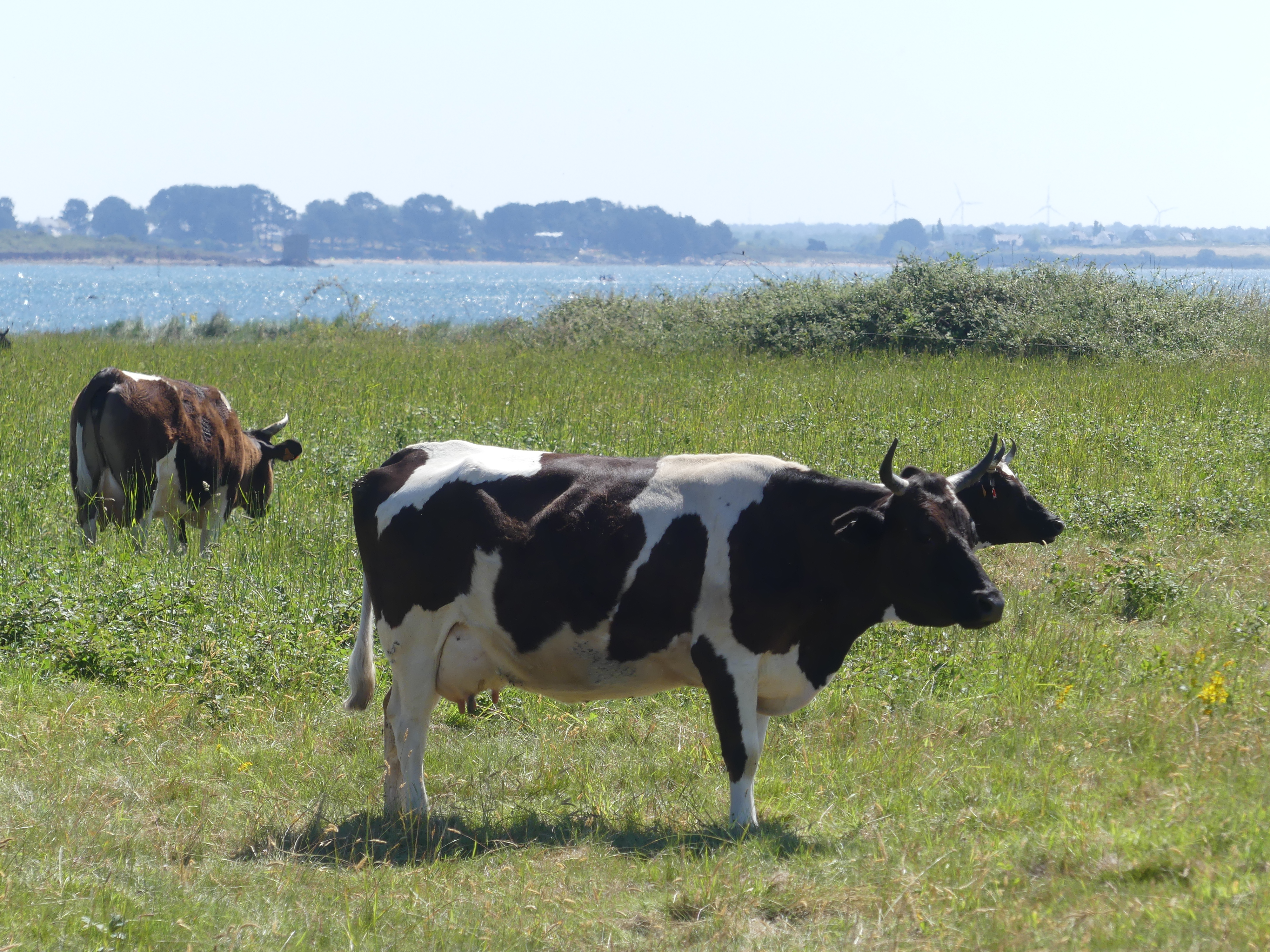
The marginalisation of the islands' agricultural activities during the 20th century led local communities to recognise, in some cases at an early stage, the importance of farming for local development beyond its primary function as a food-producing activity. On the islands, supporting agriculture is first and foremost a way of stopping land become excessively overgrown. It also helps maintain employment and limit demographic decline. On Groix in the 1950s, for example, the municipality supported the establishment of five cereal growers from the mainland because there were insufficient islander candidates. In 1973, a sheep-farming cooperative was established on Houat which remained active for six years. On Ouessant, from the mid-1970s onwards, with investment from the Parc naturel régional d’Armorique, efforts were made over several decades to revive local farming, both for subsistence and as a professional activity. These initiatives, which were ahead of their time, proved difficult to sustain in the face of mixed reactions from island populations and their incompatibility with standardised agricultural market practices that drive prices down.
In the 1990s and 2000s, farming activities came to be valued for a range of complementary reasons: diversifying the local economy and tourism offer; providing local produce through short supply chains; maintaining often remarkable levels of biodiversity in open spaces; limiting fire risks; attracting working people and their families to live on the islands year-round, which in some cases was essential to keeping schools open; and fostering social connections. More recently, the issue of food resilience on the islands, and their dependence on supplies from the mainland, has also become part of the conversation. To develop farming activities and take advantage of their benefits, local authorities have launched sustainable agricultural development programmes and, more recently, Projets alimentaires territoriaux (PATs), or Territorial Food Projects, in particular on the islands of Bréhat, Belle-Île-en-Mer, Yeu, Noirmoutier, Ré and Oléron. These programmes and projects all include a range of actions aimed at promoting the movement of food from farm to table, or from producer to consumer. In addition, some local authorities have established publicly or semi-publicly owned agricultural infrastructure (Ré, Arz, Ouessant, Yeu and Aix), making it easier for farmers to establish themselves and ensuring that these facilities remain dedicated to agricultural use beyond the tenure of their current users.
Whether made up of professionals, community members, or both, associations are often the pioneers and essential partners of local authorities in projects aimed at supporting and renewing island agriculture.
Translated by Tilly O'Neill
