
[This article is taken from content published in July 2024 on the Champs Libres website where you will find hundreds of other resources linked to Brittany’s heritage]
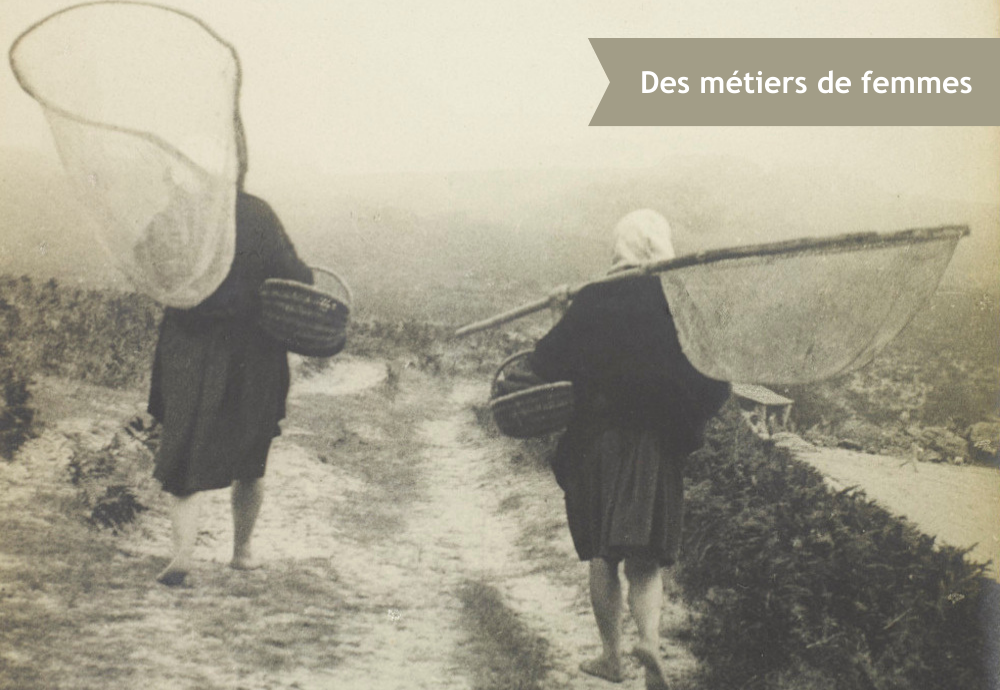
Women living in coastal areas have always worked alongside men as part of many sectors in the maritime industry.
Women of the Foreshore
For instance, on Brittany's northern coast, women gathered goémon (kelp) brought in by the tide, which was used as fertilizer in the fields. They were actively involved in the drying and burning processes needed for lye production, such as in the coastal areas of Léon up until the mid-20th century. They also worked alongside men cultivating the salt flats. On the Guérande peninsula in particular, the gendered division of labour was minimal, with women participating as fully as men, especially since salt was a valuable commodity for those who owned sections of the marshes, known as salt pans, from which they harvested salt after the seawater evaporated.
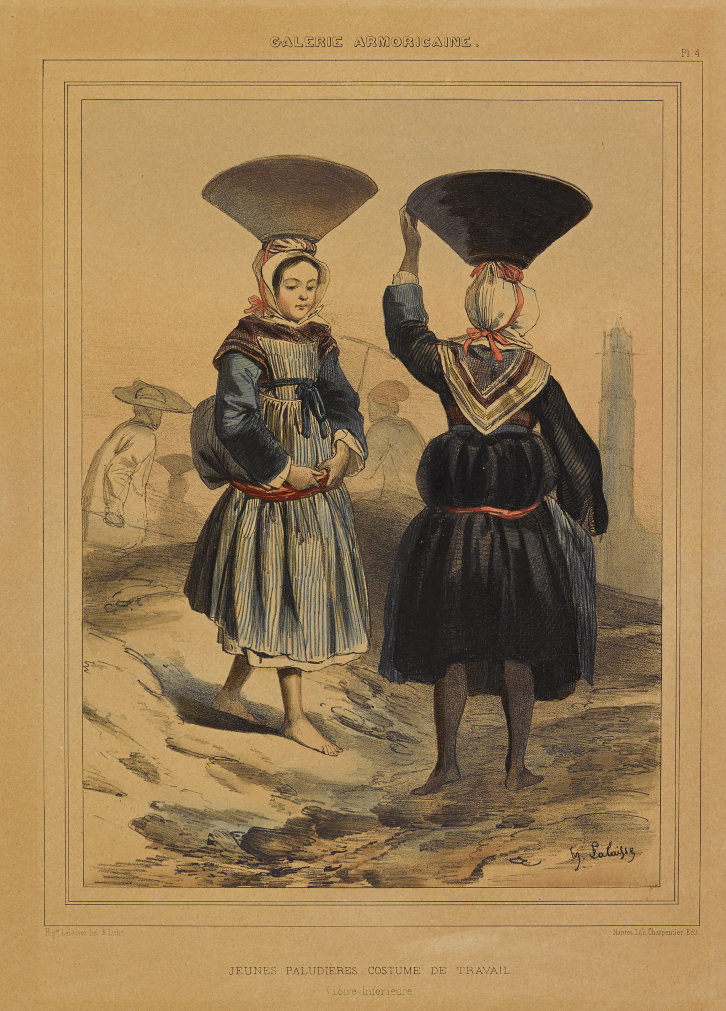
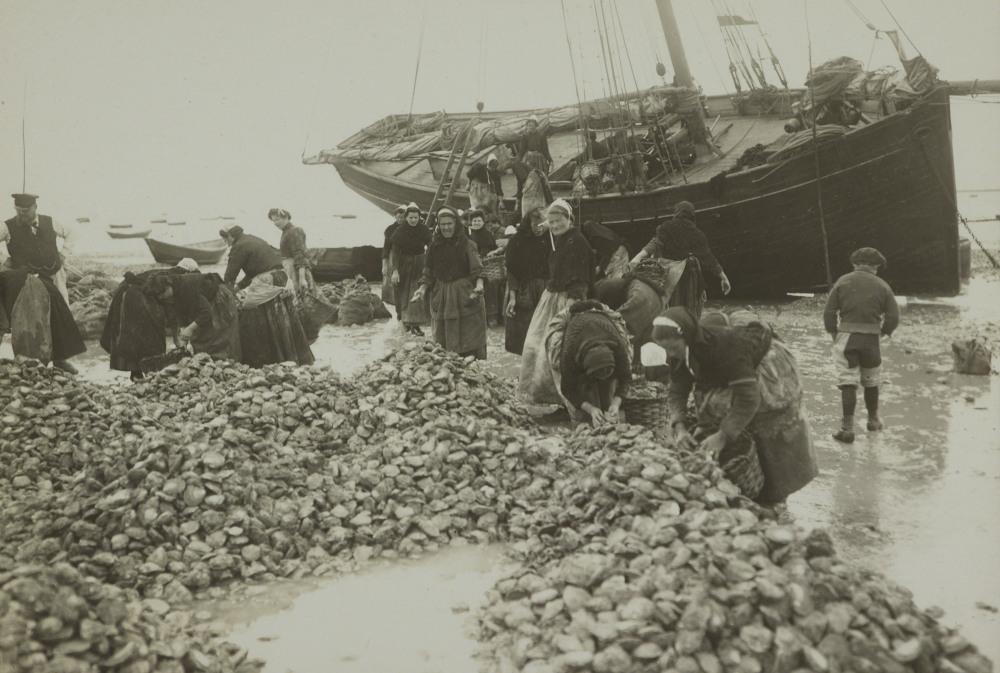
The Breton tidal zone was an area heavily exploited for its living resources, by women for the most part. For example, shore fishing for shellfish and crustaceans. For many years, this work was primarily a means of self-sufficiency, providing families with a vital source of animal protein. During long periods when the men were away at sea, women would venture onto the mudflats to gather food for their households. Any shellfish, crustaceans, or fish they collected but did not consume themselves could be exchanged for farm produce or sold. By the 18th century, whether along the Cancale coast or that of Morbihan, women had become instrumental in the early development of oyster farming, taking responsibility for sorting the shellfish on land and managing the maturation of oyster beds in the bays.
No women on board
Oyster farming was one area that provided an exception to a rule established by an order in 1681, signed by King Louis XIV’s Superintendent of Finances, Jean-Baptiste Colbert (1619–1683), which prohibited women from being employed on working boats. In the 18th century, a considerable number of women from Cancale were reported to the maritime authorities for working on boats used for oyster dredging in the Channel’s coastal waters. In the Gulf of Morbihan, women also joined sailboat crews to fish in coastal waters or serve as coastal navigators. By the early 20th century, while oyster harvesting in the Jaudy and Trieux rivers, no more than two women were allowed on board each boat to help sort the catch. Their role, however, was strictly limited, and they were forbidden from handling the oars or operating the dredger.
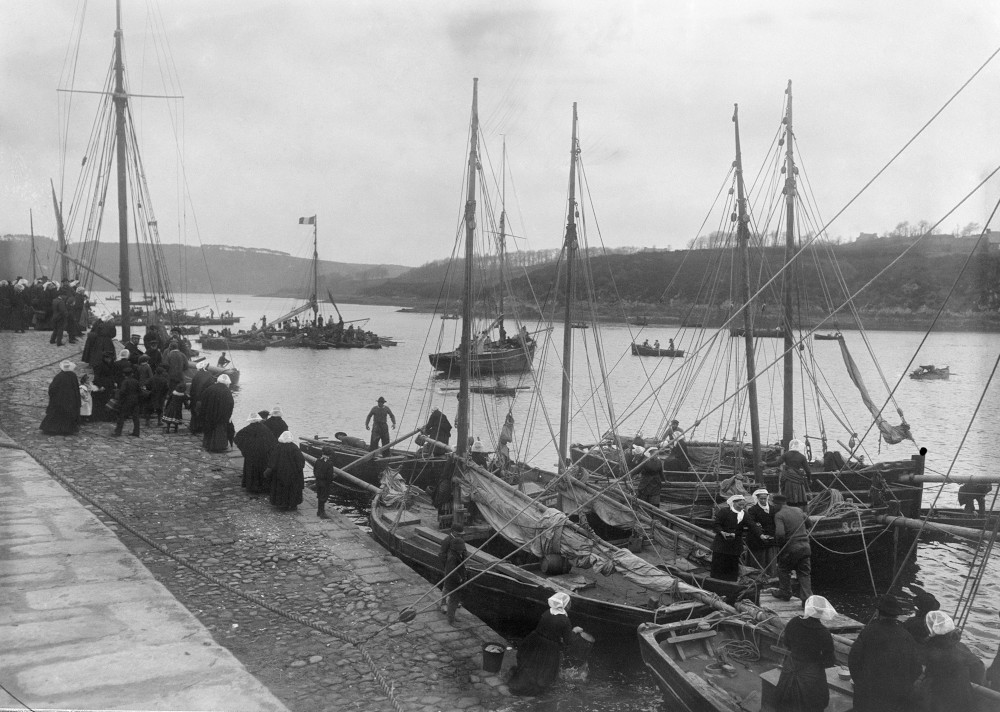
Additionally, a decision by the Lorient maritime prefecture on 28 January 1884 confirmed that women had been allowed “since time immemorial” to move freely, whether going to the oyster beds, fishing for crabs and shellfish, or navigating boats themselves, without being required show any form of official fishing authorisation. The rule forbidding women on board, unless as temporary passengers, reflects a cultural prejudice that remains deeply rooted in maritime tradition. Overcoming this stereotype is essential to fully recognise the vital role women play in the maritime economy, where their contributions extend far beyond simply boarding a ship.
Women played a central role in the transport and sale of fish at local markets, carving out a space for themselves in the business side of the complex maritime economy. Their position was often discreet and barely visible, yet officially recognised as far back as the Old Régime, when women did not limit themselves to domestic or subordinate roles. As early as the 18th century in Saint-Malo, widows and wives of sailors worked as regrattières (resellers) earning extra income to supplement the uncertain revenue that came from absent husbands. Along the Morbihan coast, historical records show widows becoming ship-owners, not only to maintain the family business left by their deceased husbands, but also to ensure it could be passed on to their sons.
A "man's job"
Despite extensive historical evidence of women’s roles in the fishing and shellfish farming industries, at the beginning of the 2020s in France, census data show that women make up only 27% of full-time employment in the sector. Slightly more than half of these work regularly in tidal zones, oyster beds, or at sea, but they are mostly confined to workshop or administrative tasks. Production sites and oyster shipping facilities are more likely to employ women in packaging and sorting roles than on oyster beds or on the production side, where the work is still considered too physically demanding for long-term female employment.
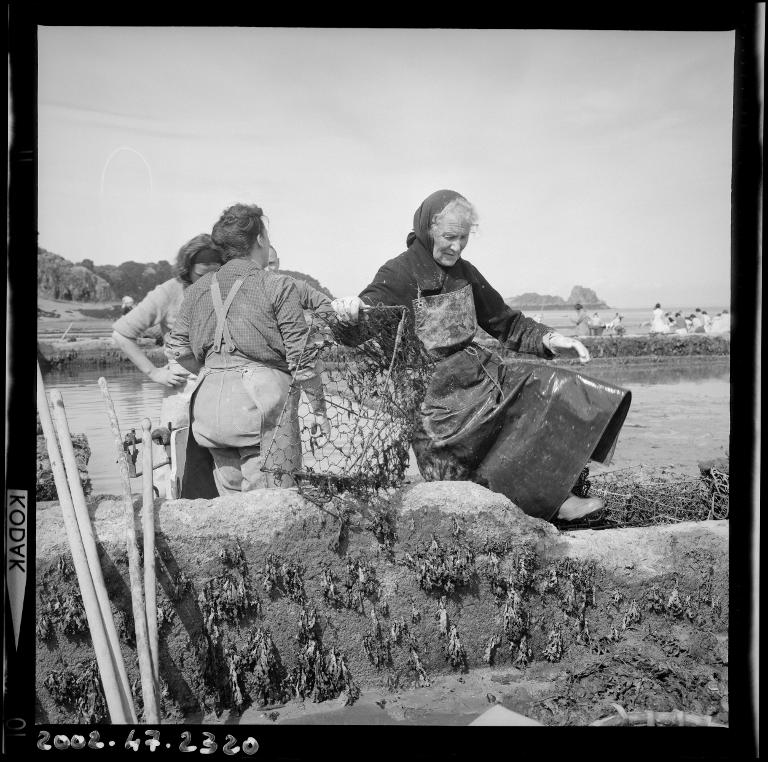
Seafaring clothing marketed for women is primarily designed for high-seas sailing. These garments are more expensive and are not hard-wearing enough to meet the specific needs of shellfish workers. Only gloves and aprons are typically available in appropriate sizes. Men’s oilskins, meanwhile, are often too large and cumbersome, making them impractical for working women.
Throughout the 20th century, women working on oyster beds, as in other maritime production, were largely invisible and their work went unrecognised. Those who worked alongside their husbands, often off the books, had no job security. Until the 1960s, when professional training programs in maritime industries were opened to women, the sea remained officially a male domain. Even access to formal training did not immediately translate into equality on operations where men continued to be the owners, managers, and holders of most rights. Inspired by activist movements in the agricultural sector, the struggle for recognition of women’s work became a driving force for progress toward equal status.
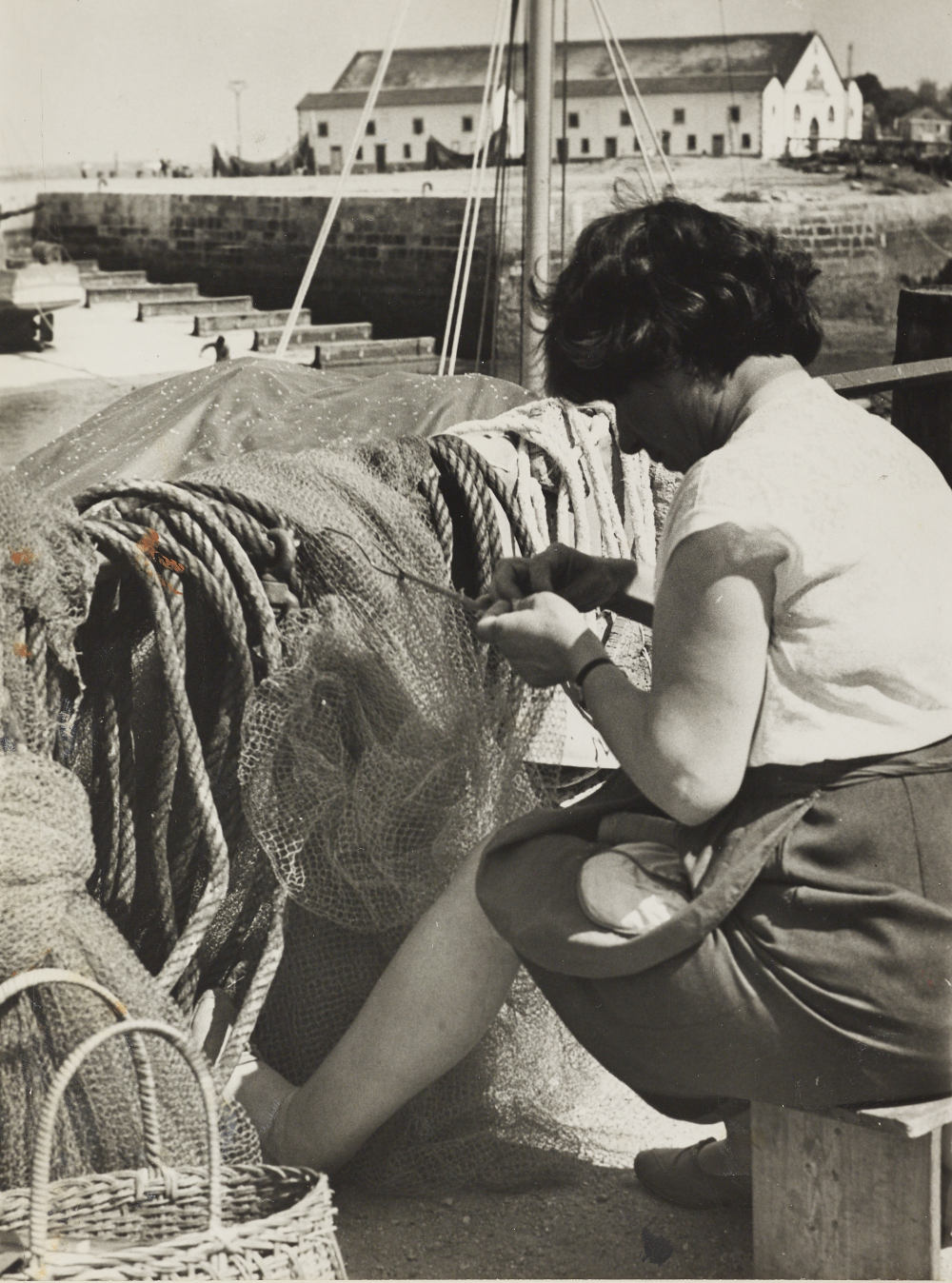
Today, Brittany is home to France’s leading maritime industry with approximately 100,000 jobs in roughly 70 different marine-related professions, both on land and at sea. Women only represent 10% of crew members, but 60% of the fish processing workforce. Gender equality at sea may still be a challenge, but it’s important to remember that it was only 60 years ago that a career as a sailor became an official option for women in France.
Translated by Tilly O'Neill
