
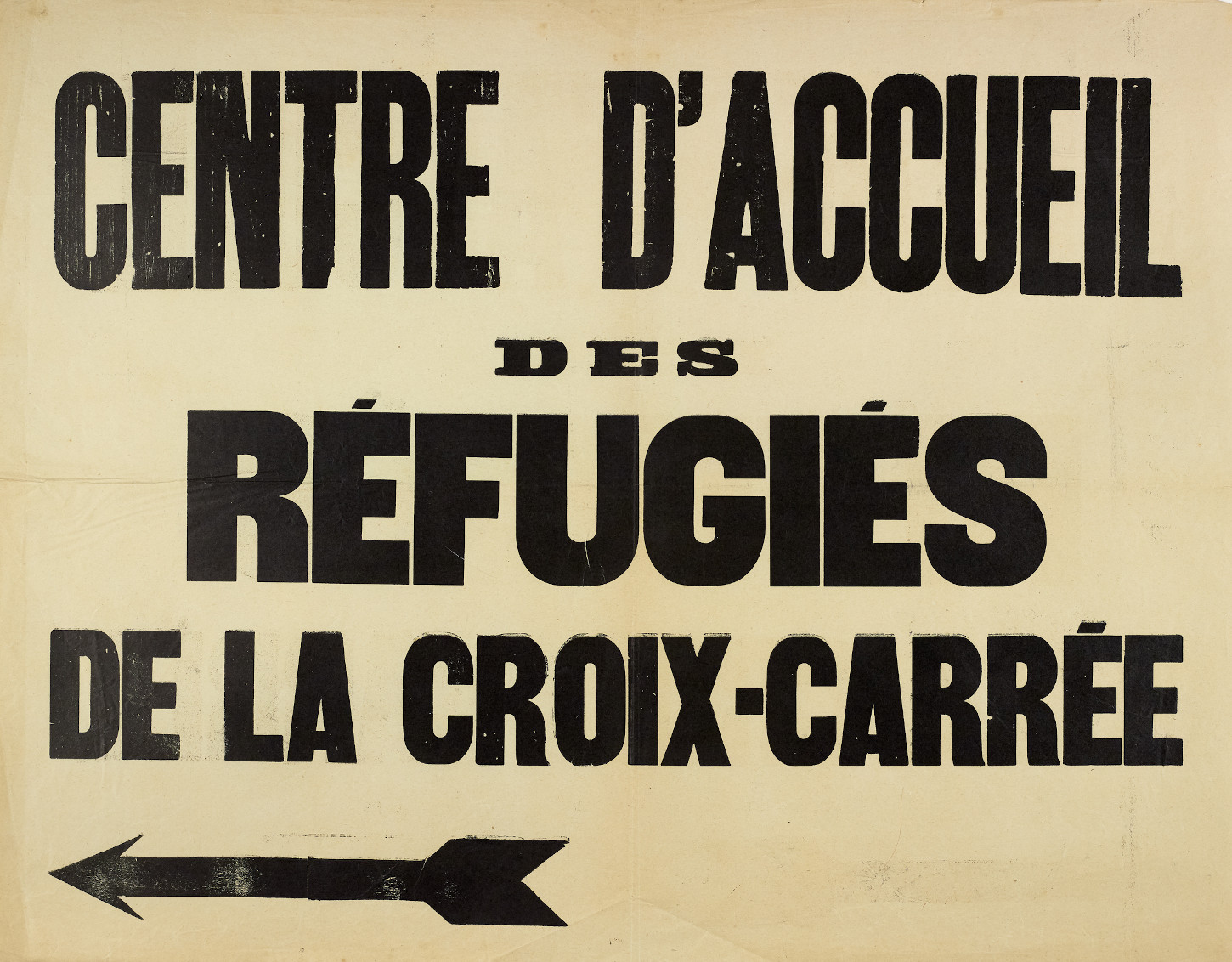
A land of emigration, Brittany was also a place of refuge, particularly during the two world wars. In both 1914 and 1940, it welcomed thousands of refugees fleeing the advancing German troops. However, these sudden and massive increases in population elicited contrasting reactions.
The Great War
As early as August 1914, the Armorican Peninsula saw the arrival of thousands of refugees from Belgium, as well as from the departments of northern and eastern France, all fleeing the advance of the German soldiers. Behind these forced exiles lay countless family dramas and painful separations. On 7 September 1914, as the First Battle of the Marne was underway, newspaper La Dépêche de Brest published an emotional appeal from Raymond Bernard, a young man of 18 who had been "evacuated from Vervins in the Aisne department” and had received no news from his parents or any of his four brothers and sisters.
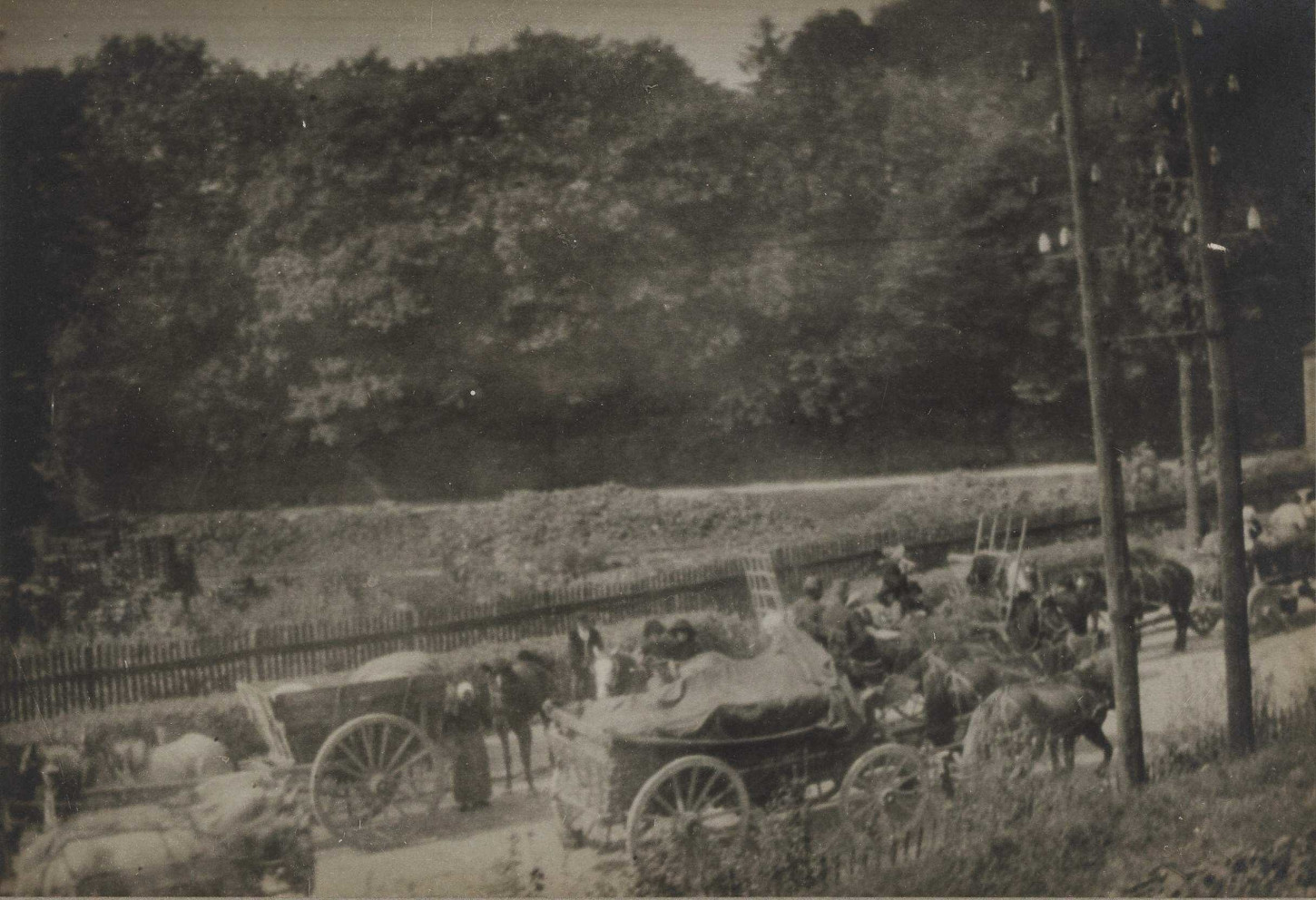 It is difficult to quantify the exodus, as archives are incomplete, but it certainly involved tens of thousands of people. These were not just men, women and children, but entire sections of society who made their way to Brittany. For example, the Chaffoteaux brothers, who in order to prevent their machine tools from falling into German hands, left the Ardennes and established their foundry on the quais de Légué in Saint-Brieuc. In doing so, they laid the foundations of an industrial success story that would continue until the end of the twenty-first century.
The geography of the battlefields helps explain why so many people sought refuge in Brittany. Far from the trenches, Brittany, although itself a maritime front, seemed to people to be a place of retreat, in contrast to the regions they had been forced to leave behind as the German troops advanced. In spring 1918, as Wilhelm II’s troops once again broke through the front, the Armorican Peninsula received another wave of refugees. On 8 April 1918, the mayor of Bédée, a small town in Ille-et-Vilaine north of Montfort-sur-Meu prepared to accommodate eight refugees.
In 1914, these refugees, displaced by the war, were warmly received by the Breton population. In Rennes, among the many charitable associations providing assistance to refugees, the Œuvre du Poupon Belge offered support to children in particular. But as the war progressed, coexistence became more difficult. In Brittany, as elsewhere, people increasingly came to blame what they began to call the “Northern Boche” for everything that went wrong.
The Spanish Civil War
The history of refugees in Brittany during the first half of the twentieth century shows that the Armorican Peninsula was connected not only to the rest of France but also to other European countries. Thus, on 1 October 1937, a Spanish tartane, a boat approximately ten metres long that had set sail from A Coruña, was found off the coast of Ouessant. On board were 27 people: twenty-two men, one woman and her three children, who were fleeing the ongoing civil war in Spain and, more specifically, the advance of Franco’s troops. La Dépêche de Brest broke the story, but gave only a very factual account of the events, seemingly not wishing to take an explicit political position.

As during the First World War, this new influx of refugees provoked contrasting reactions. Some called for solidarity, while others feared the infiltration of communist activists. The Spanish Civil War provided a backdrop against which deep divisions in opinion emerged just as quickly as the hopes of the Popular Front were dashed. In total, it is estimated that more than 20,000 Spanish refugees passed through Brittany from spring 1937 onwards. Most came from Asturias and the Basque Country. But their exile was not definitive and on 2 October 1937, La Dépêche de Brest appeared to welcome the repatriation of “50,000 Spanish refugees”, some of whom had found refuge in Finistère.
A Sanctuary in Times of Defeat?
In 1940, the collapse of the French army was so rapid that reserves did not even have time to respond. As in 1914–1918, the scale of the exodus is difficult to calculate precisely, but hundreds of thousands of refugees fled the German advance and began arriving in Brittany from mid-May onwards. However, lessons had been learned from the First World War and the Spanish Civil War, and in 1940 the region was better prepared than it had been in 1914. Thus, for example, during its session on 8 May 1940, the Ille-et-Vilaine departmental council requested financial assistance from the government to improve the water supply system “in preparation for the arrival of refugees.”
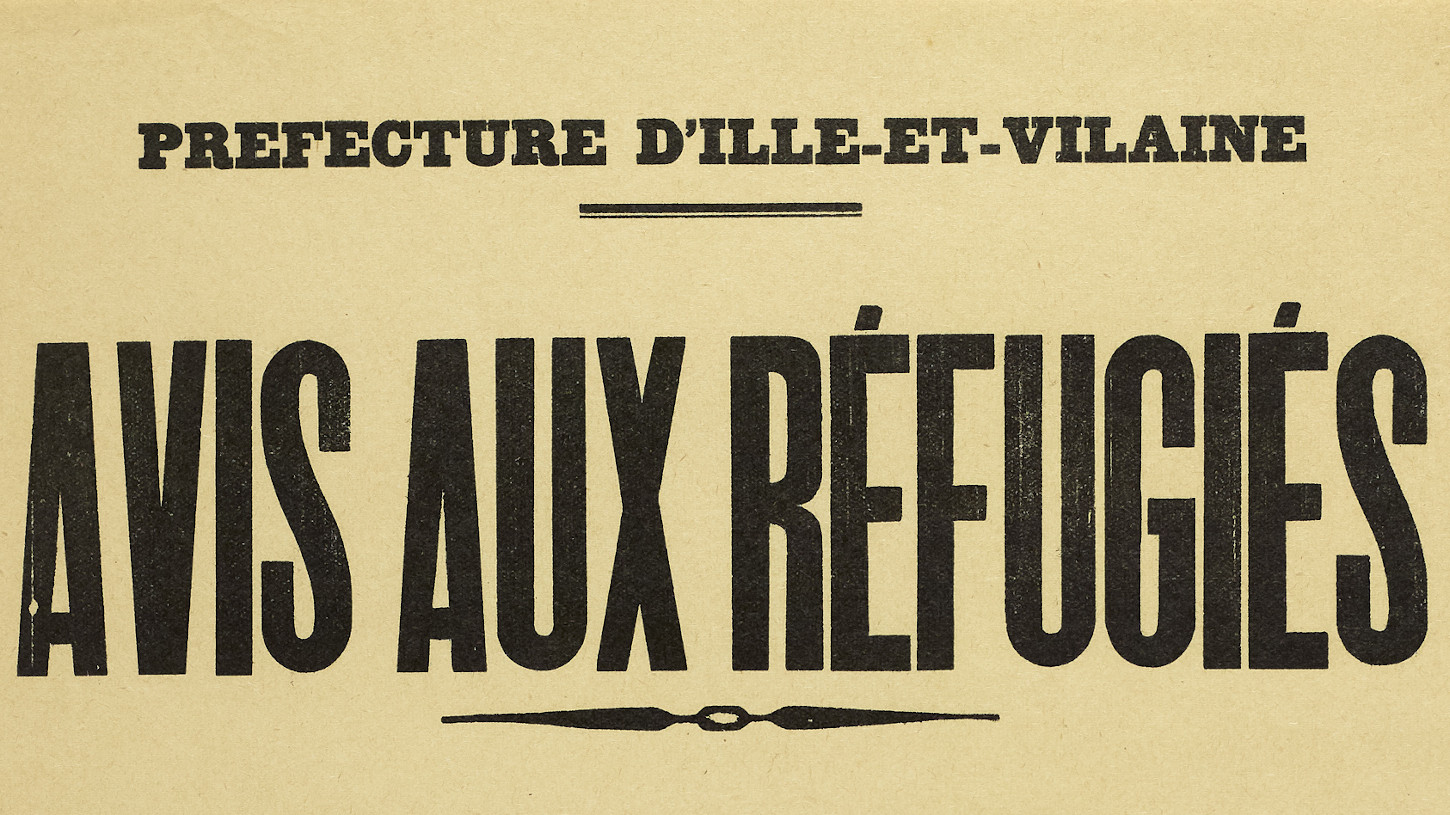
But these measures came too late. On 17 June 1940, German troops arrived in Brittany. The refugees were overtaken by their pursuers, and Brittany became a cul-de-sac for hundreds of thousands of people: families, mainly from the Nord, Pas-de-Calais, Picardy and Paris, as well as soldiers doing everything they could to avoid capture and deportation to German POW camps. Among them were thousands of British soldiers who, in the Loire estuary, found refuge aboard the Lancastria, a Cunard liner that had been converted into a military transport ship. But, in an event that came to represent that catastrophic year, the Lancastria was attacked by the German air force off the coast of Saint-Nazaire and sank rapidly, taking its passengers with it.
Translated by Tilly O'Neill