
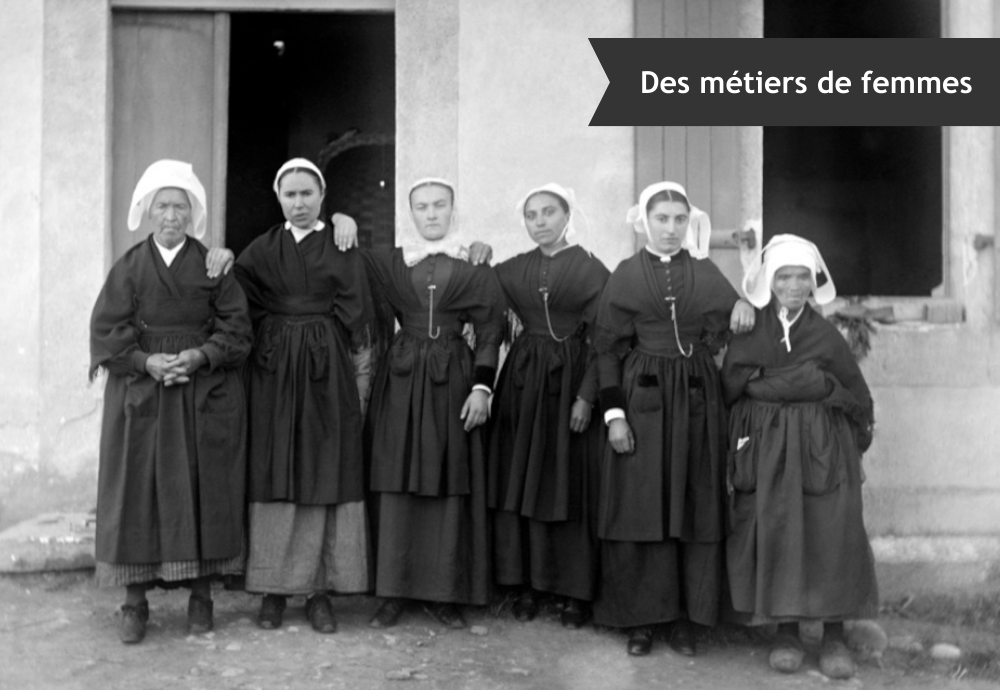
[This article is taken from content published in July 2024 on the Champs Libres website where you will find hundreds of other resources linked to Brittany’s heritage]
A world organised by hierarchy
According to 19th-century historical records, domestic service was one of the most common occupations. With industrial expansion, the number of male servants declined, and the profession became increasingly feminised. Servants were employed in both urban and rural settings. They worked for private households such as middle-class homes or farms, as well as for religious and secular institutions, including abbeys, hospitals and charitable foundations. Most lived with their employers and received not only a wage but also room and board. The profession was organised according to a strict hierarchy. At the top were female companions, nannies, and governesses, who typically served upper-class families. At the bottom were general servants or maids - commonly called bonnes (a term widely used from the 1830s), soubrettes (meaning young maids), or bonniches in rural contexts - alongside kitchen maids. Between these levels were cooks and institutional servants, who, in hospitals and asylums, were often referred to as infirmières (nurses).
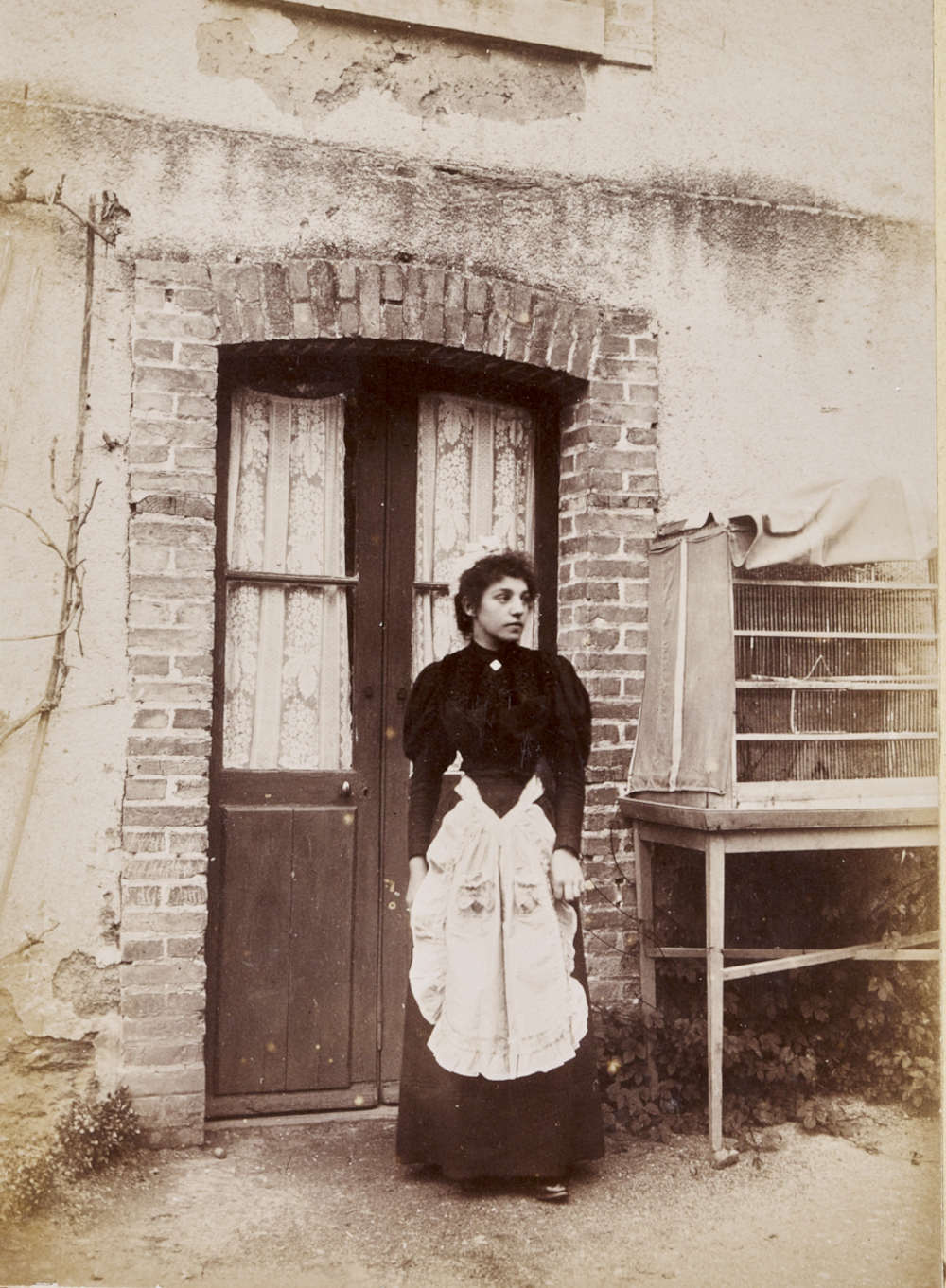
In some households, a single maid known as the bonne à tout faire (“the every-task maid”) was responsible for running the entire home - managing shopping, caring for the children, cooking, and sewing. Despite these many duties, her pay remained considerably lower than that of more specialised, trained workers such as cooks or governesses. However, it was possible to move up the domestic hierarchy, gaining advantages such as a private room and higher wages.
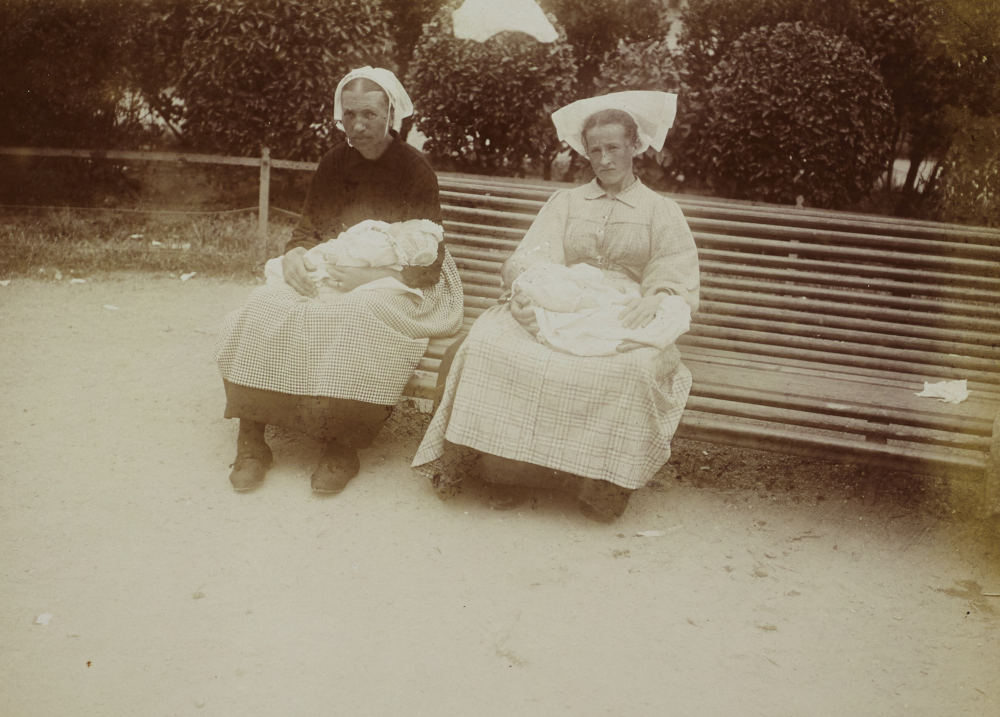
Nannies cared for babies whilst governesses looked after children and teenagers. Nannies were married women who often came from farming families. They would find a position after giving birth themselves, in order to be able to breastfeed the newborns in their care. At the start of the 20th century they were still very much in demand as part of the household staff of well-off families.
Under pressure at home, under control at work
The vast majority of servants working in cities were women of modest means who had come from rural areas. Le Manuel du valet de chambre, published in 1903 and intended for “young men wishing to enter service, batmen employed as valets, and chambermaids filling this role in households without male servants,” explains that “domestic service is the only occupation which, without any training, immediately provides board and lodging, along with wages that are entirely profit.” It is therefore not surprising that so many young people left the countryside, where they worked extremely hard for little pay, to seek employment as servants in the city. By the end of the 19th century, demographic pressures in rural Brittany were particularly intense. In the early 1870s, more than 70% of Bretons still lived in the countryside, but agricultural holdings could not support the entire population. As a result, most young people chose to leave, looking for work in towns and cities or even farther afield, such as in Paris.
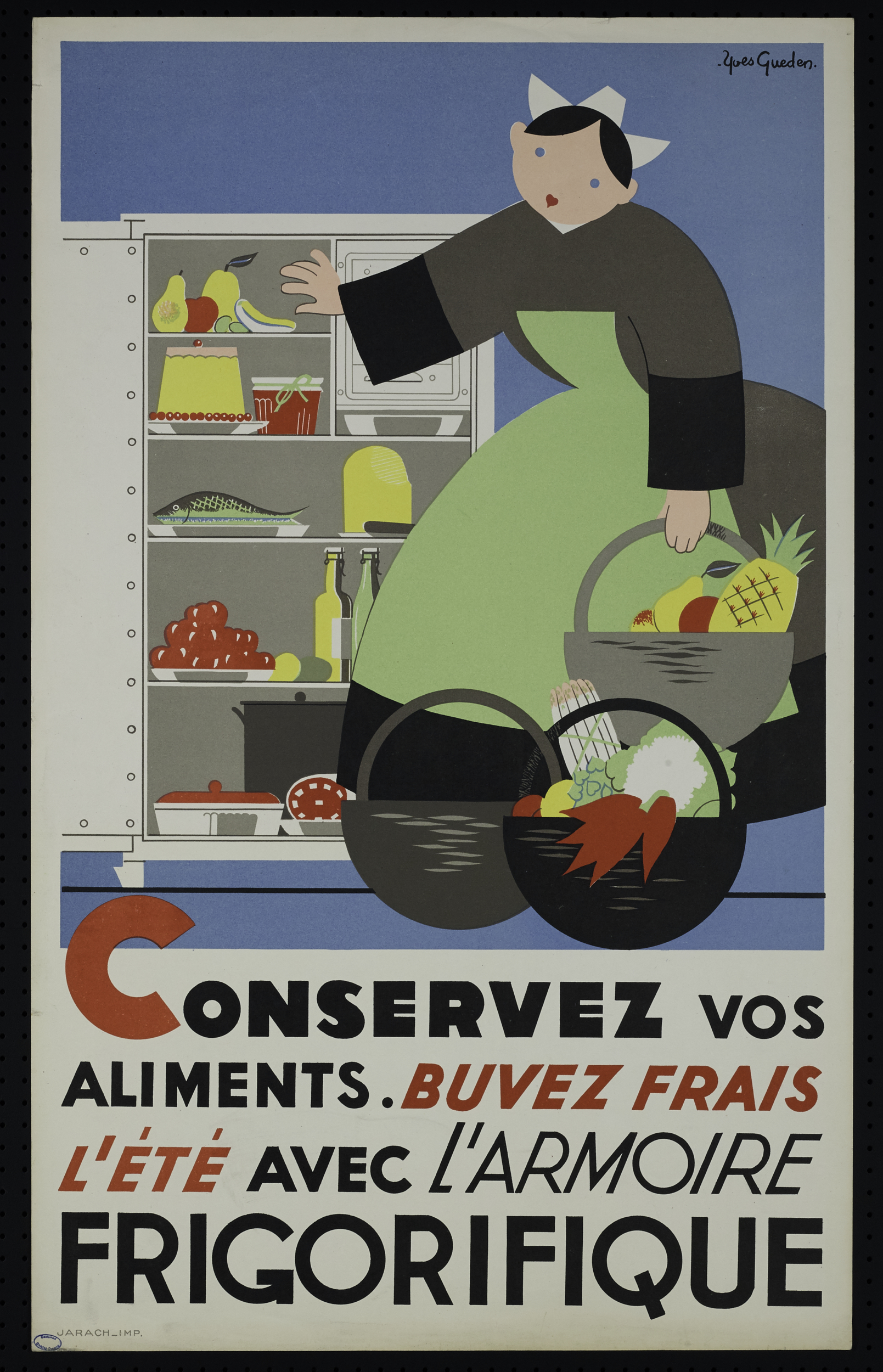
Brittany’s migrants included many hardworking women and young girls who, though often inexperienced, were highly sought after by middle-class families in the capital. This phenomenon became part of popular imagery in 1905 with the creation of the character Bécassine in the first issue of La Semaine de Suzette. Figures dressed in Breton costume went on to become stereotypical representations of domestic servants in advertising imagery.
Many kitchen maids and domestic servants began working as early as the ages of 14 or 15. The profession was generally well regarded, unlike factory work, which, from the second half of the 19th century, became an alternative for women. Many families believed that domestic service allowed young women to acquire the skills needed to manage a household once they were married. Employment was typically based on a fixed-term contract agreed upon by the head of the household and the servant - or, if she was underage, her parents. Working hours were often extremely long, with few limitations. In 1860, the “domestic contract” became compulsory, requiring the terms of employment and duties to be set out in writing. In 1868, a law required employers to provide a certificate upon the termination of a contract. This livret, or booklet, served both as a form of security and as a means of control, since employers could dismiss servants without giving a reason. Maids who suddenly lost their positions could find themselves on the streets, especially if they were far from home. In such vulnerable situations, some were driven into hardship, including alcoholism and prostitution.
Living between hope and fear
Finding work was a central part of life for domestic servants, as demand for their labour was high. In the provinces, recruits were often hired during “domestics market days,” known as the Louées de Saint-Pierre or de Saint-Jean. These events could be humiliating for applicants, who were inspected and judged much like livestock at a cattle market. In Paris, employment agencies charged exorbitant fees, which quickly earned them a poor reputation. In 1908, L’Œuvre des gares, a charitable organisation based in major train stations in Paris and across the provinces, began receiving young women who'd travelled far from home, to protect them from falling victim to human trafficking or prostitution. From the late 19th century, some influential members of Paris’ Breton community were already aware of this issue. This led the Abbot François Cadic (1864–1929) to establish the La Paroisse bretonne de Paris at Notre-Dame-des-Champs in 1897, with the goal of helping its members find employment. The association dissolved after Cadic’s death, having lost much of its influence to emerging lay organisations, such as the Fédération des Bretons de Paris. In 1950, the Abbot Élie Gautier (1903–1987) founded the Mission bretonne, located on rue Delambre near Montparnasse station and the church of Notre-Dame-des-Champs. This new Catholic organisation collaborated with L’Œuvre des gares to produce a poster depicting the platforms of Montparnasse station as places of great danger for young Breton women.
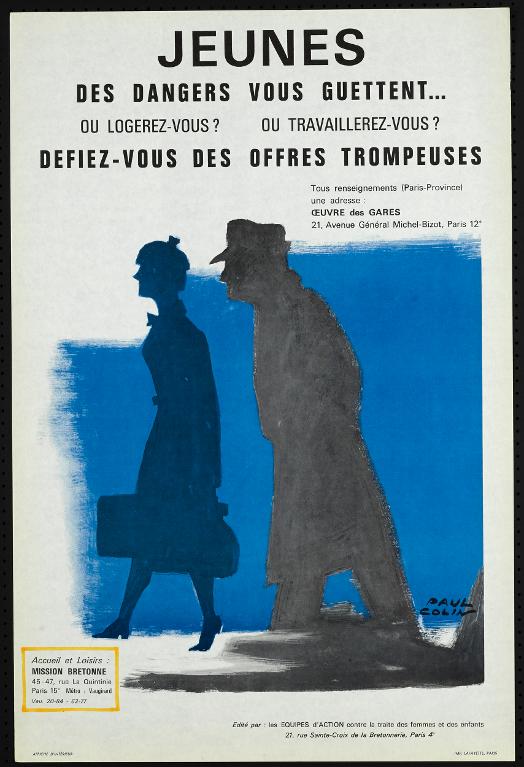
"Young people, beware: danger lies ahead. Where will you live? Where will you work? Be cautious of false promises of help or employment. For more information: ŒUVRE des GARES, 21 avenue Général Michel-Bizot, Paris"
In 1958, the Service Social Breton was established at Montparnasse station to assist young Breton women arriving in Paris. Fifteen years later, a dedicated residence with an officially recognised public function opened just a few metres from the station, funded jointly by the City of Paris and the departments of Côtes-d’Armor, Ille-et-Vilaine, Finistère, Morbihan, and Loire-Atlantique.
Translated by Tilly O'Neill
